
How to quote a price for a job: work out the cost before the total
A useful quote starts with what the work will cost your business. Build the price from labour, materials and overheads, then allow for risk and the profit you choose.

Knowing how to quote a price for a job starts before you open the quote document. You need a reasonable estimate of the work, the cost of delivering it and the amount the business needs to earn. Copying the last job's total can carry yesterday's mistakes into tomorrow's diary, especially when access, supplier costs or the crew have changed.
This guide is about calculating the price. Once the numbers make sense, our guide to writing a quote that wins the job covers presenting the scope and making the customer's decision straightforward. Keep the working calculation for the office, even when the customer receives a simple fixed total.
Calculate what a working hour really costs
Start with the annual cost of employing the people who deliver the work, including your own time on the tools. Wages are only one part. Include super, insurance and other employment costs that apply to your business. Use your actual records and current arrangements rather than borrowing another business's hourly figure. Check the requirements for your trade and state.
Next list the operating costs that keep those people working: vehicle ownership and running costs, tool replacement, repairs, insurance, phones, software and administration. Quoting, organising suppliers, answering calls and chasing missing paperwork also take paid time. An owner doing that work after dinner still has a business cost to recover, even when no separate wage is drawn for the evening.
- Build the cost list from a useful period of business records, allowing for irregular annual bills and replacement tools.
- Separate expenses already included in your hourly calculation from costs you will charge directly to a job, so neither gets counted twice.
- Include office and owner administration time somewhere in the calculation, whether as overhead or a separately planned job activity.
- Review the calculation when wages, staffing, vehicle arrangements or the mix of work changes, rather than waiting for the next busy season.
Divide by hours you can actually recover
Paid hours and chargeable hours are different. Leave, training, meetings, maintenance, gaps between jobs and unsuccessful quoting reduce the hours available to earn revenue. Estimate the hours you can realistically recover across the year, using previous time records where possible. Divide the annual costs allocated to those hours by that smaller, realistic number to find a cost per recoverable hour.
Treat that result as a cost base, not the selling rate. If you use separate rates for a lead tradesperson and an assistant, calculate each person's contribution consistently. For a two-person task, count both people's hours. A four-hour visit with two people is eight labour hours, before any separately allowed preparation or travel. Forgetting the second person can undo an otherwise careful estimate.
Allow for materials and the work around them
Get a current supplier figure for the specified quantity and product, including delivery and any special handling. Check pack sizes, wastage, minimum orders and whether unused items can be returned. A customer's rough measurement is a starting point for investigation, not a reliable order quantity. Record the date and source of the estimate so someone can recheck it before ordering.
Choose a materials markup that reflects how your business handles purchasing, storage, breakage and returns. There is no single sensible markup for every job. Keep purchase cost and selling amount visible in your working sheet, and avoid recovering the same handling time through both an overhead allowance and an extra charge without a clear reason. Review specialist or made-to-order items separately.
Price travel, access and specific risks
Walk through the job from loading the ute to leaving the site tidy. Include travel, parking, unloading, protecting surfaces, setting up, disposal and collecting any hired equipment. Narrow stairs, restricted working hours or a long carry from the street change labour needs. The same repair in two houses can therefore need different prices without either customer being treated unfairly.
Separate work you know will happen from uncertainty. If you expect a specific complication, describe the risk and allow a considered amount for it. If you cannot assess hidden conditions, explain the limit of the fixed scope and the process for approving additional work. A vague buffer is hard to learn from later; a named allowance can be compared with what actually happened.
A worked example using sample dollar amounts
The following figures are an illustration of the method, not suggested trade rates or material prices. Imagine your completed working sheet has the cost allowances below. Use one consistent tax basis for the internal calculation, then make the customer document's GST treatment and final total clear. These sample amounts do not determine the tax treatment for your business.
- Add delivery costsSample labour cost is $720, the materials allowance is $580, travel and access cost is $140, and hire and disposal cost is $100. Together these known cost allowances come to $1,540.
- Allow for identified uncertaintyA further sample risk allowance of $100 brings the working cost allowance to $1,640. Write down the uncertainty it covers rather than leaving the extra amount unexplained in your internal notes.
- Choose the profitAdding a chosen profit amount of $360 produces a working selling amount of $2,000 on the same calculation basis. Profit is separate from paying wages and recovering overheads; those costs were already allowed for.
- Check the resultReview the total against the actual scope and your capacity. If the price needs to change, change the scope, the method or the chosen profit deliberately. Do not quietly delete costs just to make the total look easier to accept.
Choose fixed price, hourly or do-and-charge
A fixed price suits work you can define and assess with confidence. You take responsibility for your estimate within that agreed scope, so confirm quantities, inclusions and access before sending it. An hourly arrangement can suit investigation or uncertain work, provided the customer understands the rate, minimum charge if any, travel, materials and when you will update them about cost.
Do-and-charge is a label people use differently. Spell out what it means in your agreement: recorded labour, materials supplied, handling charges and other agreed costs. Discuss a spending checkpoint where useful and contact the authorised person before moving beyond it. Never assume a customer understands the pricing basis simply because someone used a familiar trade expression on the phone.
State assumptions and follow up with a purpose
Before sending, list the assumptions that matter: clear access, sound existing surfaces, normal working hours and the exact products included. Name exclusions and explain how changes will be priced and approved. Give the quote a sensible review date linked to supplier validity and your availability. Follow up to ask whether the scope is clear, then review actual costs after the job to improve the next calculation.
Keep a short version history of the calculation when the customer changes the scope. If they remove an item, check whether travel, setup or hire costs still apply before subtracting the whole original line. Some costs disappear with the task; others remain because the crew still has to attend. Apply the same reasoning when adding work to a visit already planned. A revised total should come from a revised delivery plan, not an arbitrary discount. Record why the figure changed so the office can explain it later and the finished job can be compared with the right estimate.
How Nenvik helps
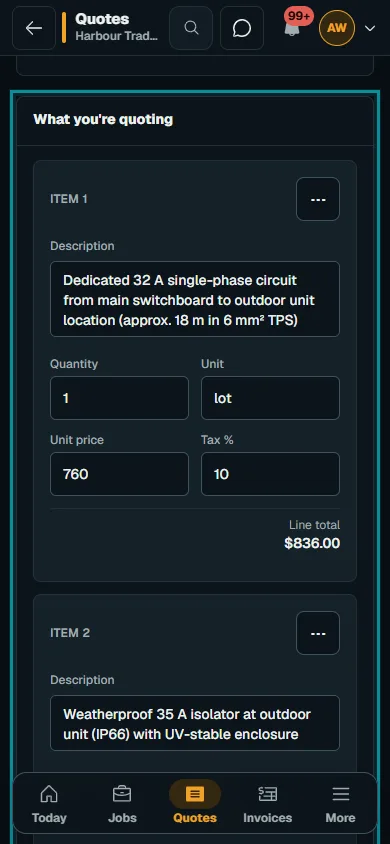
Nenvik lets you enter quote descriptions, quantities and prices after doing the calculation. Follow create and publish a quote, then use quote follow-ups to review activity. The demo below shows the line-item area where your checked selling figures belong; it does not calculate your business's true hourly cost for you.
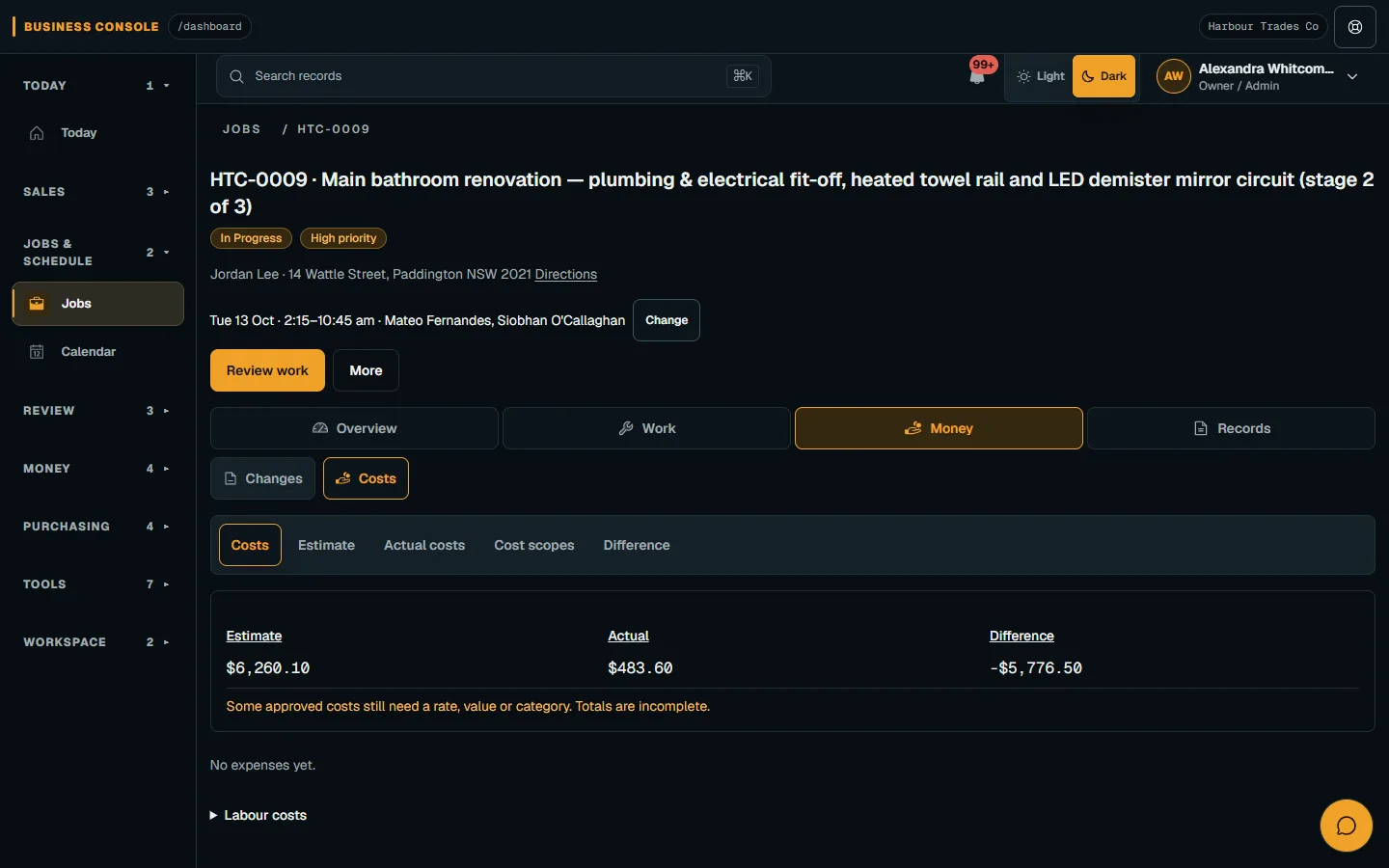
After delivery, job cost review compares estimates with recorded actual costs and identifies incomplete cost evidence. The same process can support plumbing and drainage work or other trades. Check feature access for your plan and team role before setting up the workflow.
Common questions
How do I work out a price for a job?
Estimate the labour, materials and other costs needed to deliver the agreed scope. Recover overheads consistently, allow for identified uncertainty and add the profit you choose. Check the resulting total against the site conditions before sending it.
Should my hourly rate be the same as my wage?
Your wage is only part of the cost of providing a working hour. Super, insurance, vehicles, tools, administration and non-billable time also need to be recovered. Work from realistic recoverable hours rather than every paid hour.
How much markup should I add to materials?
Choose an amount based on your purchasing, handling, storage and return costs, together with your pricing approach. Keep the purchase cost and selling amount separate in the working calculation. Avoid counting the same cost twice.
When should I quote hourly instead of a fixed price?
Hourly pricing can suit investigation or work with uncertain scope. Explain the rates, materials basis and cost checkpoints before starting. A fixed price works better when you can assess and clearly define the included work.
More from the blog
 How to quote glass and glazing jobs from measure to fittingA glazing quote needs a reliable record of each opening before glass is ordered. Keep measurements, product decisions and fitting assumptions connected through to installation.Read article
 A practical landscaping and irrigation business workflowLandscape projects and maintenance rounds need different plans, but they rely on the same clear site records. Connect the assessment, quote, crew tasks and handover before work starts.Read article
 Pool service rounds and recurring visits: a practical workflowA dependable pool round needs more than a list of addresses. Agree the visit scope, keep useful readings and equipment records, and make faults easy to turn into approved repair work.Read article