
How to quote glass and glazing jobs from measure to fitting
A glazing quote needs a reliable record of each opening before glass is ordered. Keep measurements, product decisions and fitting assumptions connected through to installation.
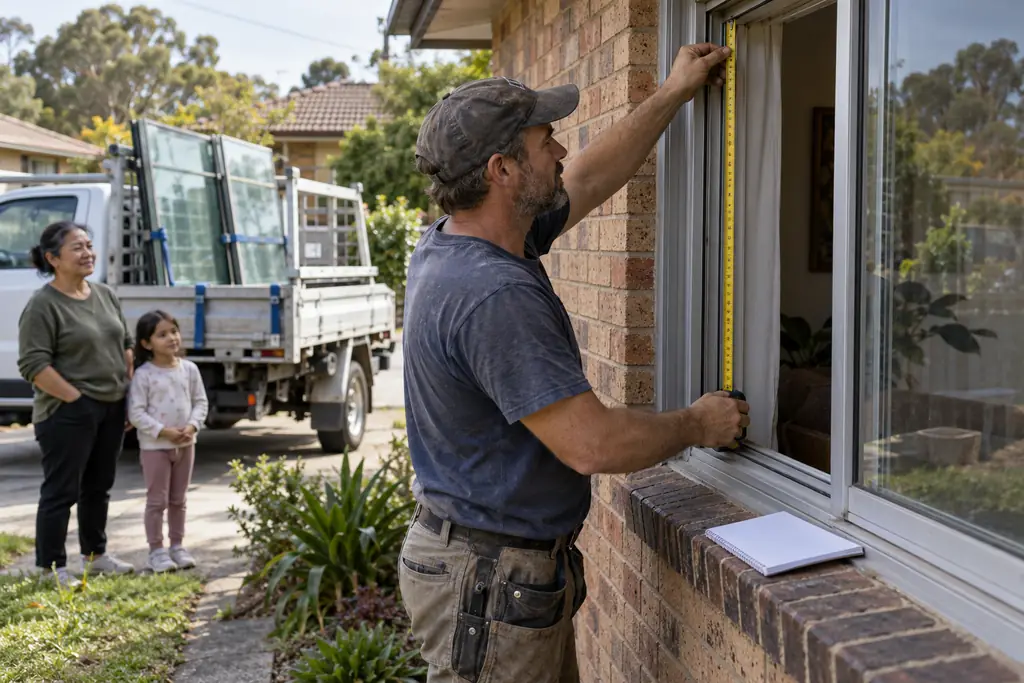
A residential glazing quote can involve several visits and decisions before fitting day. Someone measures the opening, another person checks the product, the supplier confirms availability and the office organises the installation. The quote needs to carry the same opening reference through all of those steps. A neat total is little help if the ordered panel belongs to the wrong window.
If you are looking for glass fitting software or a glazing quoting system, start with the information your team must hand over. The useful workflow runs from a checked site measure to an agreed specification, then through ordering, fitting and any adjustments. Our glass, windows and doors page shows how those business records can stay connected.
Give every opening a stable reference
Use a reference the measurer, supplier and fitter can all recognise, such as kitchen window W01. Add a room description and a photo showing where it sits. Agree which side the opening is viewed from when describing left and right. Reuse the reference on the measure sheet, quote lines, supplier instructions and fitting record instead of inventing a new description at each stage.
- Record the service address, opening reference, date and person who measured, so the office can trace a question to the correct visit.
- Write dimensions with units and explain what was measured, separating opening dimensions from any finished product dimensions supplied by your qualified team.
- Describe existing frame material, operation, visible condition and surrounding finishes, including anything that could complicate removal or reinstatement.
- Identify unresolved checks clearly. A blank box should never be mistaken for confirmation that an opening is ready to order.
Measure, then check before ordering
Build a second check into your process while the opening is still accessible. Compare the written dimensions with the reference photo and the actual opening. Where several similar windows are involved, check their identifiers individually rather than assuming they match. Decide who reviews the measure before the supplier receives it, especially for made-to-order products that cannot simply be put back on the shelf.
Keep the checked version distinct from rough notes collected during the enquiry. If the customer changes the opening or product choice, revisit the affected measurements and assumptions. Reading back a number over the phone is useful, but it does not replace checking what the number describes. Record who confirmed the revised information so the fitting crew is working from the latest agreed scope.
Inspect frame condition and the route to the opening
Look beyond the glass. Note visible frame damage, operation, seals, surrounding surfaces and any previous repairs. Explain where condition remains unknown until removal. If the customer expects a difficult sash or damaged frame to be repaired as part of a glass replacement, settle that expectation before pricing. Separate a known repair from an allowance for something that has not yet been inspected.
Walk the delivery and carrying route as well. Consider parking, gates, stairs, restricted access, occupied rooms and the space needed for handling equipment. Confirm who will move furniture and protect belongings. Access and safety planning belong with the people responsible for the work; a quote should record the resulting labour and equipment scope without pretending a software checklist makes the activity safe.
Have the right person confirm the glass and product
Glass type, thickness, configuration and suitability need to be selected and checked by a qualified person for the actual application. A customer asking for double glazing has described a preference, not a complete specification. Record the product decision and its source, then check the quote and order match. Check the requirements for your trade and state.
For double glazing quotes, distinguish the options in language the customer can follow without inventing performance claims. Describe the specified product, frame work, fitting scope, finish and any supporting supplier documents. If an option needs another measure or technical review, say so before acceptance. Do not let an attractive option label hide a different access requirement or an unresolved frame issue.
Build the price from supply and fitting lines
Work from current supplier information and your own labour estimate. Separating supply from fitting makes it easier to explain a change when the customer chooses a different product. It also helps the office see whether delivery, removal and disposal were included. Keep any internal cost calculation separate from the customer-facing descriptions so each serves its purpose clearly.
- List the supplied productsUse the opening references, checked quantities and confirmed descriptions. Include relevant delivery and handling allowances and note the validity of supplier information before using it in the final quote.
- Describe the fitting workAllow for removal, preparation, crew time, equipment, fitting, agreed adjustments and cleanup. State what reinstatement is included and what remains outside the quote, using the site inspection as your reference.
- Offer clear alternativesPresent mutually exclusive product choices separately from optional extras. Check each alternative still includes all the labour and handling it needs, so the customer is comparing complete outcomes rather than incomplete supply figures.
- Review the whole jobCheck the total against the expected sequence of visits. Include a return adjustment visit where you intend to provide one, rather than leaving the fitter and customer to discover different expectations after installation.
Agree deposits and lead times before ordering
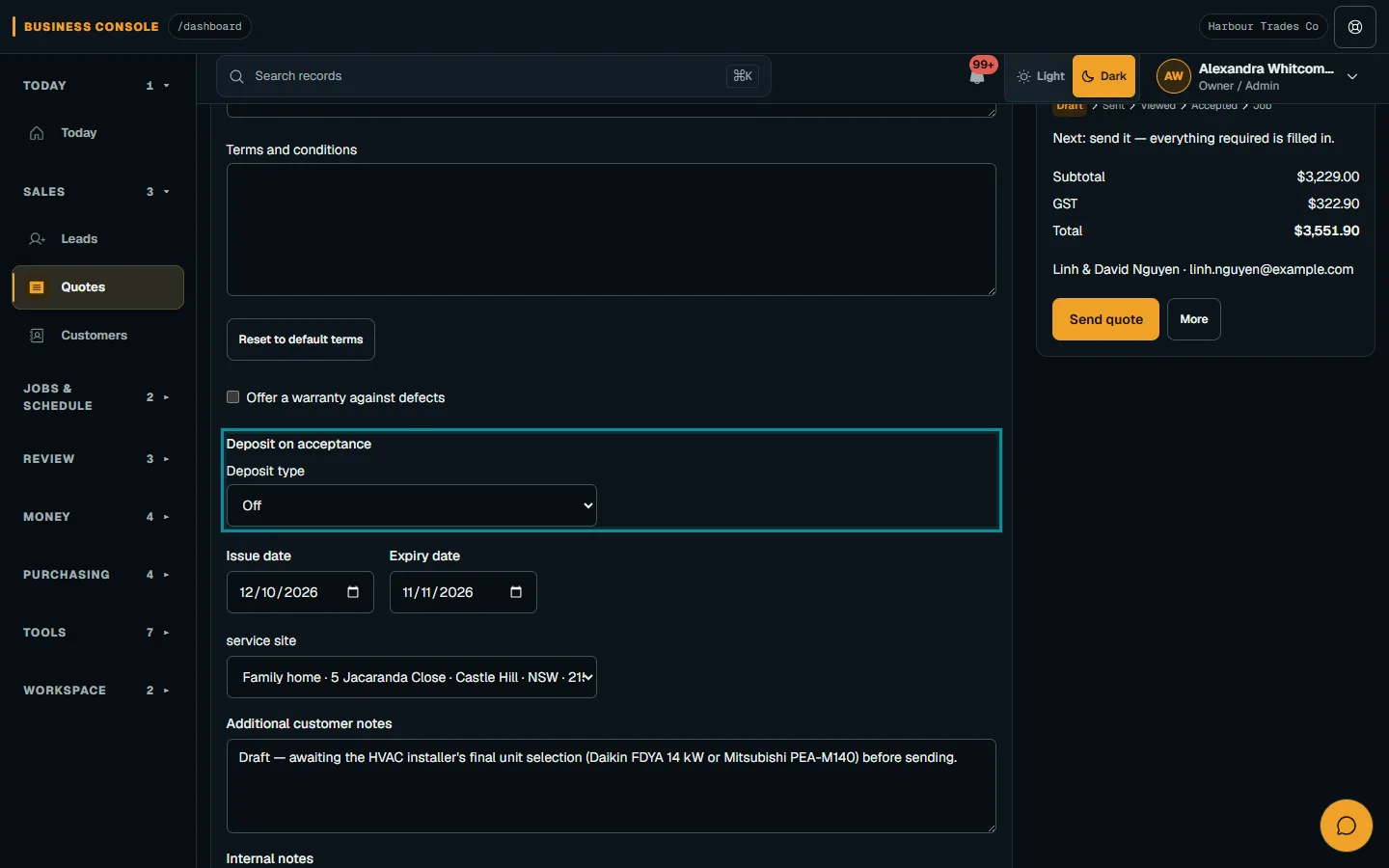
Confirm supplier availability and explain which dates are estimates. Distinguish the likely supply date from the installation booking, with time to check the goods on arrival. Put the deposit arrangement and ordering checkpoint in the quote. A customer accepting the scope and a customer paying the deposit are separate events; the office needs to check both before releasing a special order.
For Nenvik users, deposit on quote acceptance explains the sequence: a configured deposit invoice is issued automatically on online acceptance, but acceptance alone does not confirm payment. The demo shows where the deposit is set. It is not evidence that a particular customer has paid or that goods have been ordered.
Record unexpected frame work before proceeding
If removal exposes worse frame damage than expected, record what you found and pause the affected additional scope. Explain the proposed work, revised amount and timing to the authorised customer before proceeding. Distinguish the original allowance from the new finding. Read job change orders and customer approval for recording that decision, and writing a clear quote for keeping the original exclusions clear.
Check delivered products against the fitting plan
When goods arrive, compare the supplier documents and product identification with the checked order and opening references. Record damage or a mismatch before organising a fitting visit around the delivery. Keep the customer's latest selection beside the order so a superseded option does not slip through. If the goods need another review, tell the office which opening is affected and what confirmation is still needed. This is especially useful when one delivery covers several homes or several similar openings at one site.
Before dispatch, give the fitter the current scope, access notes and any agreed adjustments. After fitting, record the opening reference, work completed, checks performed and remaining actions. A clear closeout makes a later adjustment visit easier to plan because the next person can distinguish a known outstanding item from a new fault. Review that record before preparing the final invoice, checking that any extra work has the corresponding approval.
How Nenvik helps
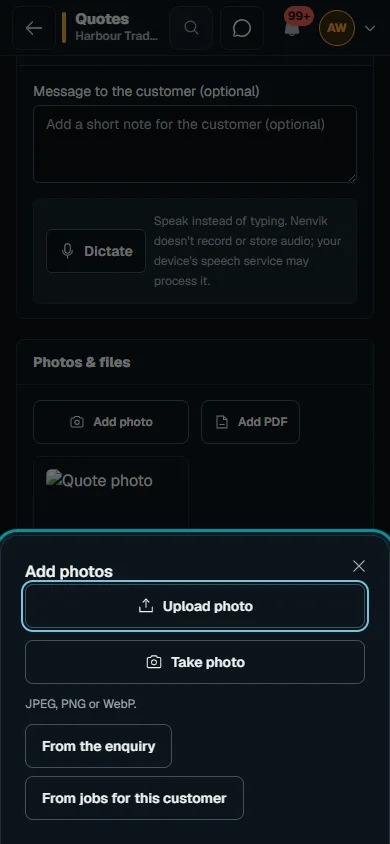
Nenvik's assignment forms can record your measure fields; your team manually applies the appropriate template to each assignment. Quotes support separate lines, options and photos. Follow adding quote photos: eligible Before, Progress and After job photos can be deliberately copied to a quote, while Issue photos cannot. Nenvik records your team's information; it does not calculate glass specifications or certify the work. Feature access depends on plan and role.
Common questions
What should a residential glazing quote include?
Identify each opening and the checked product specification, then describe supply, removal, fitting, access and disposal. State frame assumptions, exclusions and lead-time expectations. Explain deposits and how additional work will be approved.
How should I compare double glazing quotes?
Compare the specified products and complete fitting scope, including any frame work and access allowances. Ask about unresolved checks and the difference between estimated supply dates and installation dates. A matching total does not mean two scopes are equivalent.
Can Nenvik choose the right glass specification?
Your qualified team selects and checks the glass for the application. Nenvik forms can record the measurements and decisions they enter. The software does not calculate glass specifications or certify suitability.
Does accepting a quote mean the deposit has been paid?
No. When a deposit is configured, online acceptance automatically issues a deposit invoice. Check the payment evidence separately before ordering products under your agreed deposit arrangement.
More from the blog
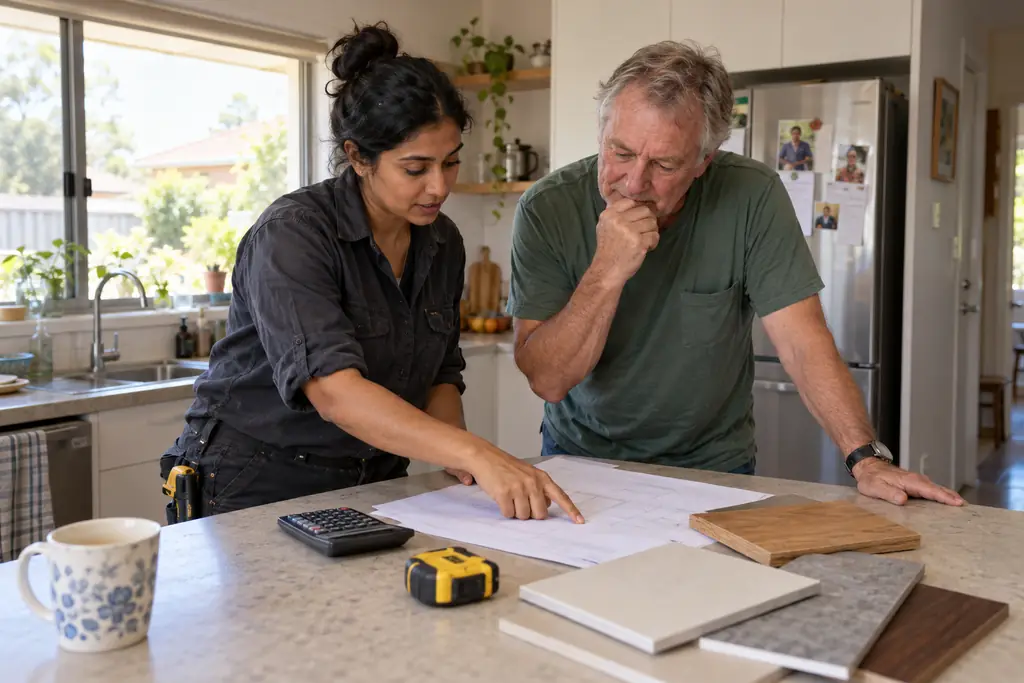 How to quote a price for a job: work out the cost before the totalA useful quote starts with what the work will cost your business. Build the price from labour, materials and overheads, then allow for risk and the profit you choose.Read article
 A practical landscaping and irrigation business workflowLandscape projects and maintenance rounds need different plans, but they rely on the same clear site records. Connect the assessment, quote, crew tasks and handover before work starts.Read article
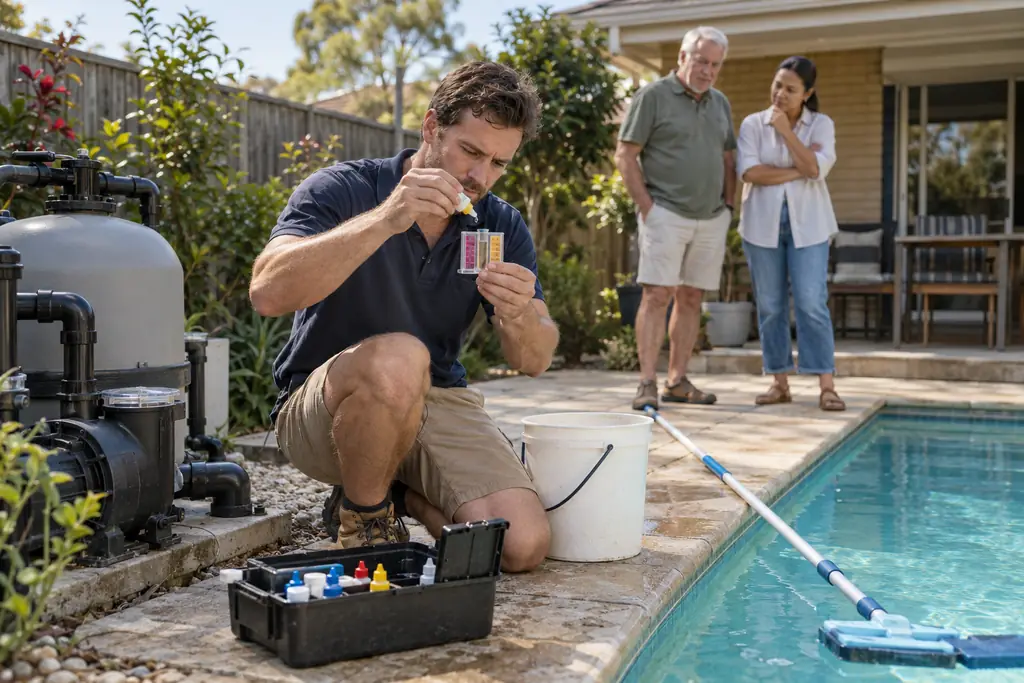 Pool service rounds and recurring visits: a practical workflowA dependable pool round needs more than a list of addresses. Agree the visit scope, keep useful readings and equipment records, and make faults easy to turn into approved repair work.Read article