
HVAC invoicing: from the completed service job to a clear bill
Turn the completed service record into an invoice the customer can understand. Keep labour, parts, deposits and confirmed payments connected to the job.
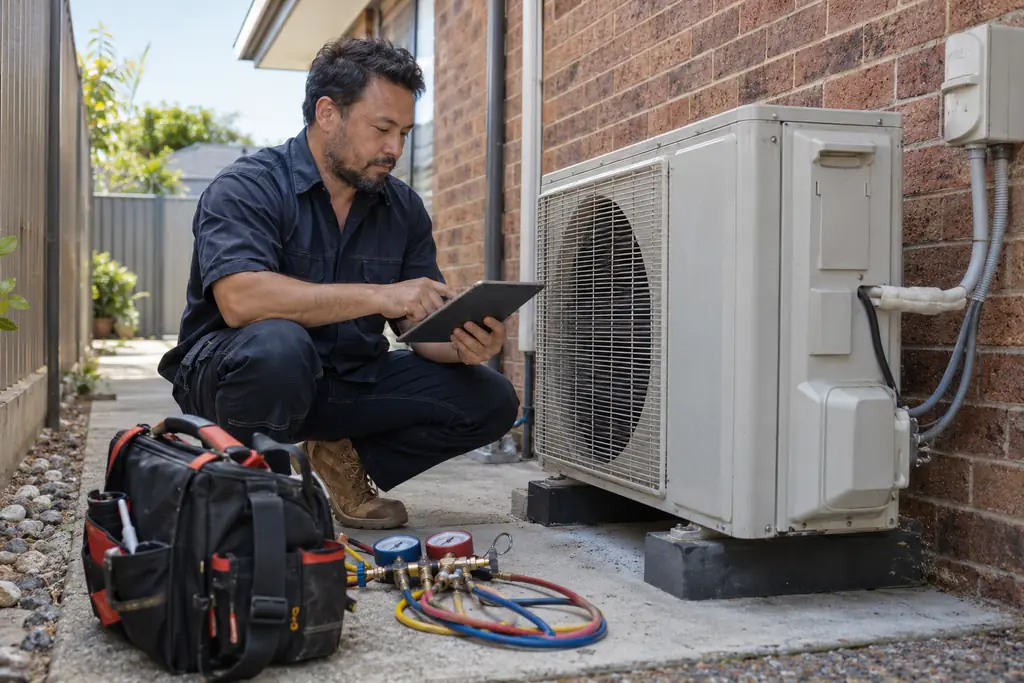
HVAC invoicing starts with the service record, not an empty invoice at the end of the week. The office needs to know which unit was attended, what the technician did, which parts were fitted and what the customer agreed to pay. When those details stay on the job, the person preparing the bill can review the work without reconstructing a phone conversation.
Whether you call it billing software for HVAC or an HVAC invoice app, look for a practical path from completed work to a checked invoice and recorded payment. Our HVAC industry workflow connects that path with breakdown quotes, equipment records and maintenance visits. Decide who reviews the job and who issues the bill before introducing a new process to the crew.
Start the invoice from the completed job
Ask the technician to record the work while the details are fresh. A useful service note identifies the unit, the reported problem, the checks carried out, the work completed and any unresolved item. Record materials used and time against the assignment. Keep a recommendation for a later repair distinct from work already authorised and delivered, so it does not quietly become a charge on today's invoice.
In Nenvik, create the invoice from the job and use linked quote items as a starting point where appropriate. Follow the invoice and payment workflow to review, issue and record payment evidence. Check the draft against the actual completed scope rather than assuming every quoted item was supplied. A job record gives you the evidence to make that decision; it does not make the commercial decision for you.
Separate service, parts and call-out lines
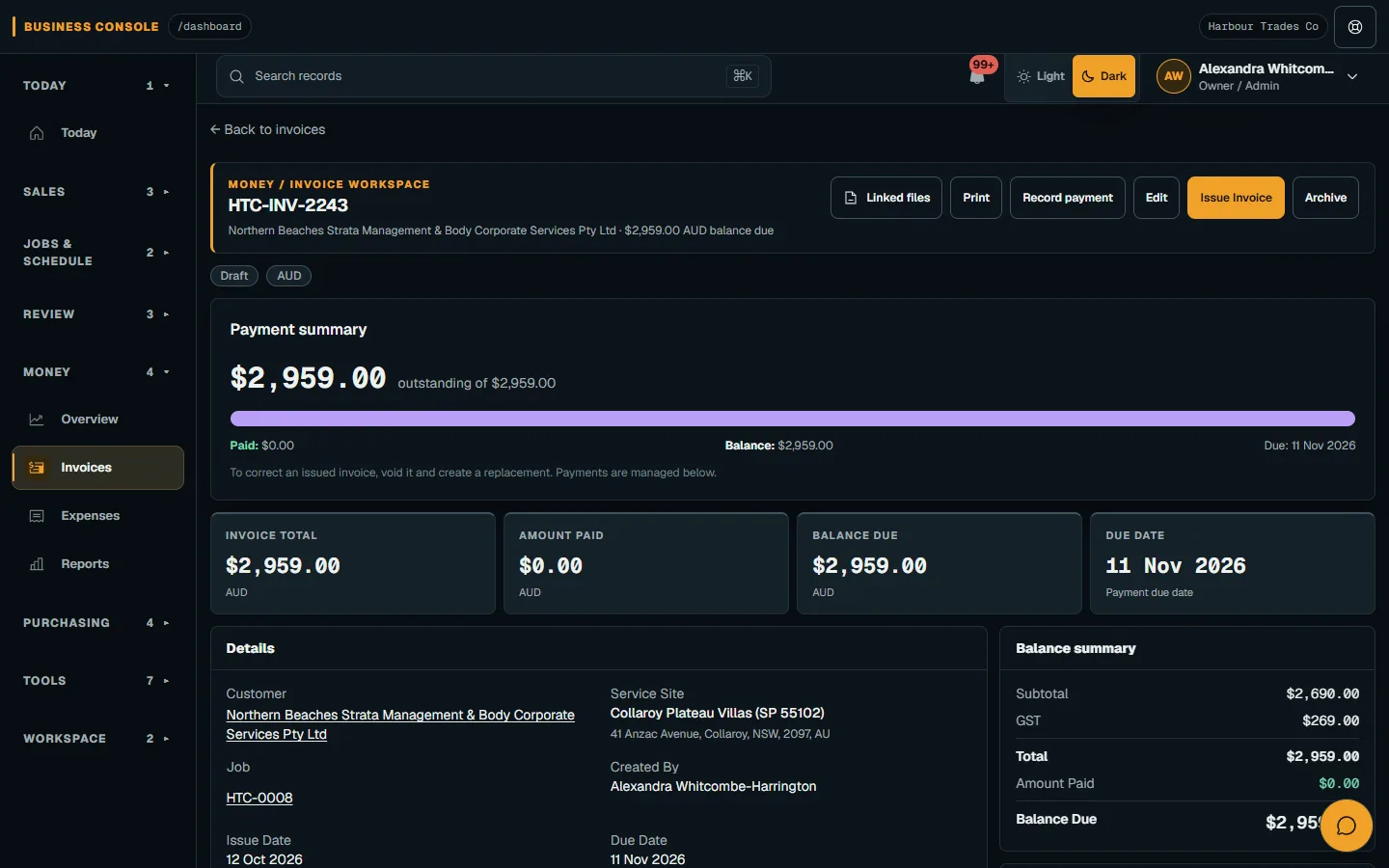
Write descriptions a customer can recognise without knowing your internal part codes. Separate the service labour, supplied parts and agreed call-out charge when that reflects your pricing. Identify the unit or area where useful, especially at sites with several similar systems. The invoice should explain what was delivered, while the detailed technical observations remain in the appropriate work record.
- Service labour: describe the attended unit and completed service or repair, using the agreed pricing basis.
- Parts and consumables: identify what was supplied and the quantity, avoiding vague descriptions such as miscellaneous materials.
- Call-out or travel: show the charge agreed before attendance and check whether the quoted service already included it.
- Additional work: check the customer's approval and the completed scope before including it in the bill.
Keep the same charging language from quote to invoice. If diagnosis and repair were separate visits, make that distinction readable rather than combining everything into an unexplained labour total. Review quantities, units and descriptions before sending. A clear invoice helps the customer ask a precise question, and it helps another staff member answer without asking the technician to remember the visit.
Agree installation deposits before ordering
An installation often involves a different payment arrangement from a routine service. Discuss the deposit and remaining payment stages when preparing the quote, alongside equipment choice, access and installation scope. Put the agreed terms in writing. A deposit request that arrives after the customer thought everything was settled creates avoidable questions just when you want to organise supply and the fitting date.
Nenvik supports a fixed or percentage deposit configured on a quote. With that deposit configured, online acceptance automatically creates and issues the deposit invoice. Read deposit on quote acceptance for the sequence. Acceptance is the customer's decision on the quote, not evidence that money has arrived. Check the deposit payment separately before acting on your agreed ordering arrangement.
Describe progress or staged billing in plain words
For work delivered over several visits, describe when each payment becomes due using milestones both sides understand, such as equipment delivery, installation completion or the agreed final handover. Name the included work and who checks that it has been delivered. Avoid relying on an internal stage name that means little to the customer, and do not treat an appointment date as proof a stage is complete.
Prepare each bill against the agreed scope and review earlier invoices and payments before issuing the next one. Keep deposit, progress and final amounts distinct in your records so the same work is not charged twice. This is a deliberate invoicing process, not a promise of an automatic construction progress-claim system. If the scope changes, settle the revised work and payment arrangement before preparing another bill.
Resolve warranty and chargeable work before billing
A return visit is not automatically chargeable just because the technician spent time on site. Check the earlier work, equipment details, warranty information and the terms you actually agreed. If responsibility is unclear, record the question for the office to resolve. Explain any proposed charge to the customer before doing additional paid work, rather than letting the invoice introduce that decision afterwards.
Use customer assets and service history to retain model, serial number, installation and warranty dates, with service entries that can link to jobs. Those records help locate the earlier visit; they do not decide warranty eligibility or submit a manufacturer claim. Keep the unit reference consistent in the work notes and billing description so a later query can be traced to the correct equipment.
Email a clear invoice with a way to pay
Check the billing contact, due date and remaining amount before issuing. A customer should be able to open the invoice, recognise the work and understand the next step without calling the office. If someone else pays the bill, resolve that contact arrangement early. Sending promptly after review can remove an administrative delay, although the customer's own payment process still affects when funds arrive.
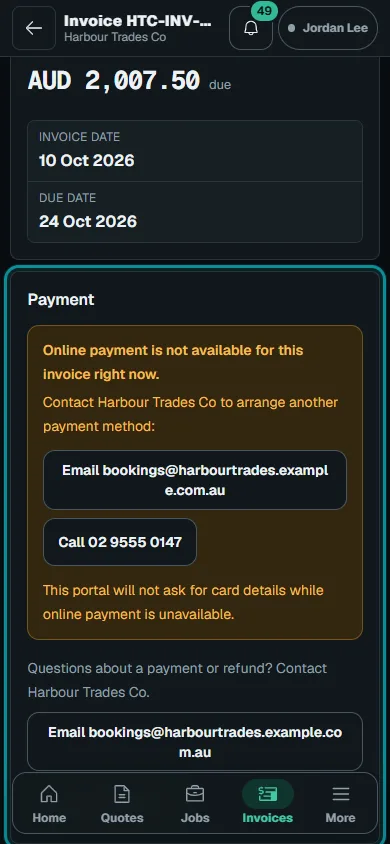
When the business Owner has connected the business's own Stripe account, customers can pay an emailed Nenvik invoice by card through the secure link. The card payment guide covers setup and customer payment. Funds go to your Stripe account, and Nenvik records payment when Stripe confirms it. An email being sent or opened is not payment evidence.
Record payments and follow up from the balance
For payments received outside card checkout, record the actual amount, date and method against the correct invoice. Check whether it was a full or part payment and review the remaining balance before sending a reminder. Avoid entering the same receipt twice because two people handled the enquiry. Keep corrections traceable so the next staff member can understand why the balance changed.
Resolve billing questions while the evidence is fresh
Give the office a short daily review of completed work that is ready to bill and work still waiting on an answer. A missing part description needs a different next step from a disputed extra charge. Name the person who will resolve the question and keep the supporting job reference close. That routine avoids sending an unclear invoice simply to clear the desk, while also stopping a small unanswered question from holding up the entire week's billing.
If a customer questions the bill, start with the agreed scope and the relevant visit record. Explain which charge relates to diagnosis, supplied parts or the return repair, and check whether the issue is a description, an amount or an approval. Correct an actual error through the supported invoice and payment process rather than adding an unexplained manual receipt to make the balance disappear. After resolving it, improve the original quote wording or technician handover so the same misunderstanding is less likely on the next job.
Getting paid faster is a working habit: capture evidence on the day, review completed jobs, issue clear bills and follow up unresolved balances with the customer. Check GST treatment and invoice presentation with your accountant, using settings that match your business. Start with one service job and one installation, then adjust the handover between technician and office before extending the process across the diary.
Common questions
What should an HVAC service invoice include?
Identify the customer, site and completed work, with clear service labour, parts and agreed call-out lines where appropriate. Check quantities, payment terms, prior billing and GST presentation before issuing.
Can I invoice straight from a completed job?
Yes. Create the Nenvik invoice from the job and use linked quote items as a starting point. Review the actual completed scope and earlier invoices before issuing and emailing it.
Does quote acceptance mean an installation deposit is paid?
No. A configured deposit invoice is created and issued on online acceptance. Check confirmed payment separately before ordering under your agreed deposit terms.
Can customers pay HVAC invoices by card?
Yes, when the business has connected its own Stripe account. Customers open the emailed invoice link and pay through secure checkout; Nenvik records the payment when Stripe confirms it.
Does Nenvik decide whether a repair is covered by warranty?
No. Equipment details and service history help your team review the earlier work. Your business checks warranty terms, resolves responsibility and agrees any chargeable scope with the customer.
More from the blog
 HVAC scheduling: balance breakdowns and maintenance plansLet service plans create upcoming maintenance jobs, then assign the right people and protect space for breakdowns. Keep access, equipment history and customer updates close to the diary.Read article
 How to quote a price for a job: work out the cost before the totalA useful quote starts with what the work will cost your business. Build the price from labour, materials and overheads, then allow for risk and the profit you choose.Read article
 How to quote glass and glazing jobs from measure to fittingA glazing quote needs a reliable record of each opening before glass is ordered. Keep measurements, product decisions and fitting assumptions connected through to installation.Read article