
How much to charge per hour as a tradie: work it out from your costs
Build a charge-out rate from the costs of your own business and the hours you can bill, then use it to check hourly work and fixed-price quotes.

Your hourly charge needs to fund more than the time spent holding a tool. It has to support your pay, the costs of running the business and the hours spent doing work you cannot bill directly. Copying someone else's rate leaves those questions unanswered. Start with your own records, work out what a billable hour needs to recover and then decide how that fits the work you sell.
The hourly rate calculator gives you a place to organise those inputs. It is a planning tool based on your figures, rather than a market survey. Gather your costs and review your diary before entering anything. The useful result is a rate you can explain and revise when the business changes, with clear assumptions about the hours that will actually earn income.
List the real costs of keeping the business running
Choose a consistent planning period and collect the expenses belonging to it. Annual figures can make irregular costs easier to see, provided you check that monthly and yearly entries are not mixed. Include the cost of paying yourself for the work you do. Owner pay and business profit answer different questions: one funds your labour, while the other is the return you plan for the business.
- Wages or your own pay, with an allowance for super that you review with your accountant.
- Insurance and the costs of keeping the vehicle available for work.
- Tools, equipment upkeep and a considered allowance for replacing worn equipment.
- Software, phone and other recurring business services.
- Administration and support costs, including the time needed to quote, organise work and follow up customers.
Use actual records where they exist and label estimates so you can replace them later. Check with your accountant about the figures appropriate to your situation. Avoid counting the same cost twice, such as putting a whole vehicle allowance in overheads and adding the same expense again to every labour hour. Materials and charges specific to a job need their own treatment when you build that job's price.
Count billable hours separately from hours worked
A full diary does not mean every working hour can be invoiced. Quoting, loading, ordering, travel you cannot charge, customer calls and administration all use time. So do breaks between appointments and work that needs correcting. Start from your actual working pattern and identify the hours a customer can reasonably be billed for under your agreed pricing. Keep the remaining time visible instead of assuming it disappears.
Estimate billable hours per week and working weeks per year, allowing for time away and the practical work pattern. Multiply those inputs to find the billable hours available over the year. Then test the assumption against recent weeks. If the planned hours require every appointment to run perfectly and no office work, revise them before using the result to price the next quote.
Recording work, break and travel time can help you understand where a day goes. Follow field evidence and time for recording against assignments, and weekly timesheets for the review workflow. Recorded time gives you evidence to assess; it does not decide which time your customer agreed to buy or automatically turn every hour into a charge.
Find break-even, then add target profit
Divide the annual costs you intend the labour rate to recover by your estimated annual billable hours. That gives a planning break-even cost per billable hour. It shows how much those hours need to contribute before adding your desired business profit. If the billable-hour estimate falls while costs stay the same, each remaining hour needs to recover more. Check both sides of that calculation before deciding the answer looks wrong.
Next, add a deliberate target profit per billable hour. Keep it separate from the pay already included in costs. The calculator follows this approach so you can see the difference between recovering costs and building a selling rate. Treat the output as a figure to review against your scope and customers, not an instruction to send every customer the same bill regardless of the work.
When you use a percentage target elsewhere in pricing, distinguish markup from margin. Markup compares profit with cost; margin compares profit with selling price. The markup and margin calculator helps compare those approaches. Its result depends on the cost you enter, so omitted labour or overheads remain omitted. Keep GST presentation separate from the question of whether your planned selling price funds the business.
Choose call-out, hourly or fixed-price charging deliberately
A call-out fee can describe the agreed charge for attending or assessing a problem. Explain what it covers before the visit: attendance, an assessment allowance or another defined service. State how further work will be approved and charged. Check whether travel or an initial labour allowance is already included, so an additional line on the invoice does not surprise the customer or recover the same allowance twice.
Hourly charging can suit work where the duration is uncertain, provided the customer understands the basis and how you will discuss additional scope. Your reviewed rate supplies the labour figure, while accurate records support the time charged. Explain separate materials and attendance charges. A customer should be able to follow the calculation without reconstructing a series of verbal arrangements after the work has finished.
A fixed price needs a defined scope and a considered allowance for labour, materials, access and uncertainty. Use the hourly rate internally to test the expected labour contribution, then review the whole job. Read how to quote a price for a job and writing a clear quote to connect that calculation with inclusions, exclusions and customer expectations.
Turn the calculation into a clear quote
Once you have reviewed the pricing basis, describe the proposed work in language the customer can recognise. Identify what is included, what is excluded and which assumptions need confirmation. Follow create and publish a quote to enter descriptions, quantities, prices and tax treatment, then review the customer document. Check the rate in context rather than treating a saved line item as permanently correct.
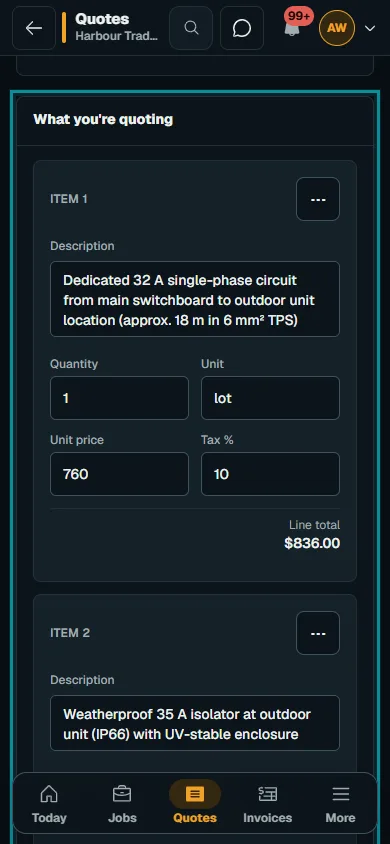
Save common work through quote templates when the descriptions and pricing have been checked. Templates help reuse the structure, but the current site, access and supply costs still need review. If the customer requests a change, settle the revised scope before relying on the earlier price. Keeping those decisions visible makes later invoice questions easier to answer.
Review rates against the work you actually delivered
Before announcing a new rate, review upcoming work and quotes already sent so the office knows which pricing applies. Explain the basis of a new quote clearly and avoid changing an existing agreement by assumption. Tell the team when reviewed templates should be used and who answers pricing questions. A well-supported calculation helps internal decisions, but the customer still needs a clear scope, a readable price and an agreed next step for the particular job they are buying.
Set a regular review point and revisit the inputs when wages, insurance, vehicle costs, workload or the work mix changes. Compare your planned billable hours with the time actually billed, and check completed jobs for repeated estimation gaps. A low return may reflect a rate that needs changing, an omitted cost, an unrealistic duration or a scope problem. Identify the cause before changing every quote.
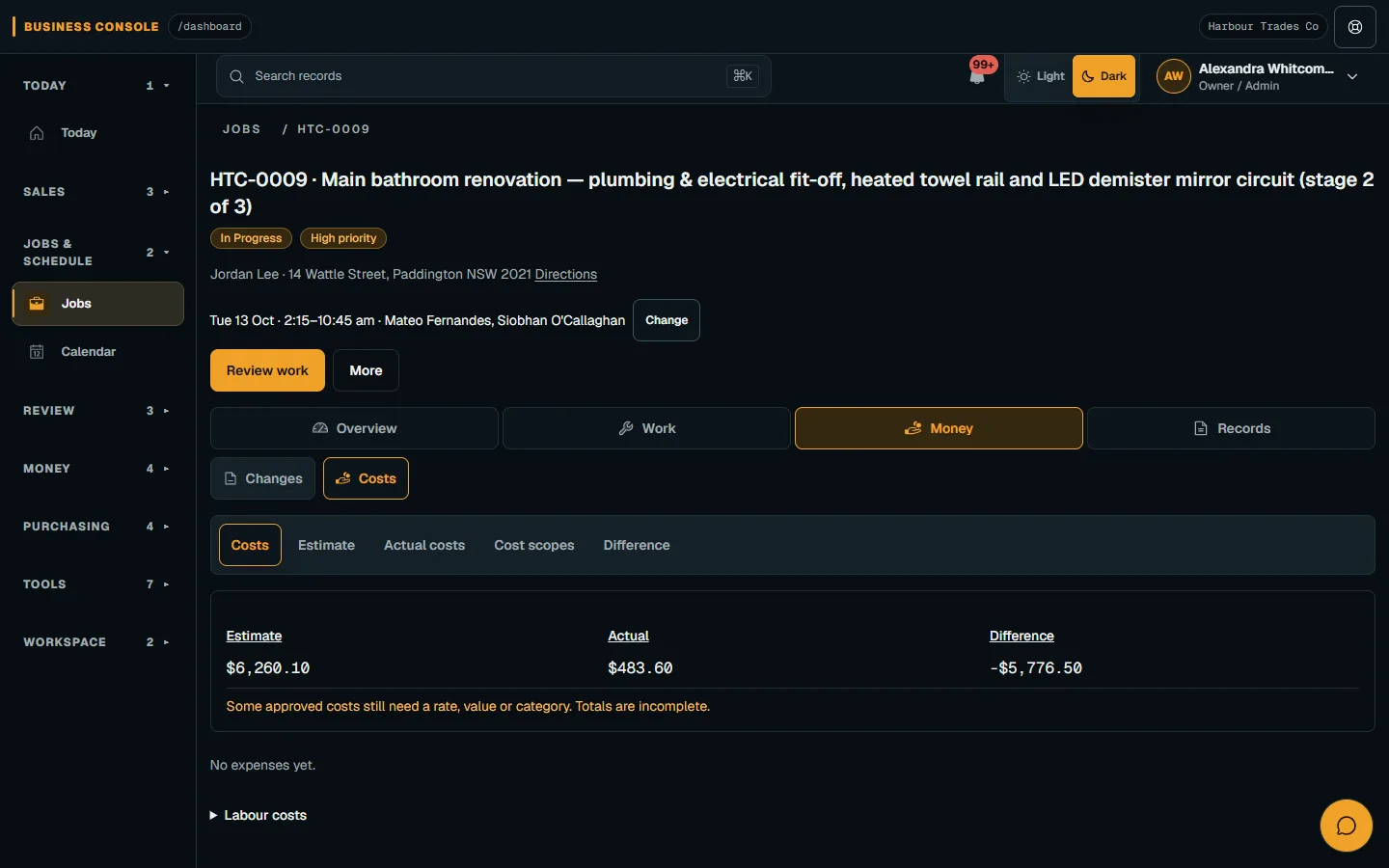
Use the job cost review controls to inspect recorded estimates and actual costs, then update the assumptions behind your next quote. Keep owner pay, business profit and tax questions separate in that conversation, and check with your accountant. Start with a calculation you can explain, review it against completed work and make deliberate changes as your own evidence improves.
Common questions
How do I work out my hourly charge-out rate?
Add the annual costs your labour rate needs to recover, divide them by realistic annual billable hours and add your target profit per hour. Review the result against your actual work and costs.
Why not divide costs by every hour I work?
Some time goes into quoting, administration and other work you cannot bill directly. The hours you can sell still need to fund that part of running the business.
Should owner pay and profit be separate?
Yes for this planning method. Include your pay in the costs, then add a deliberate business profit target. Check the figures appropriate to your situation with your accountant.
Should I use a call-out fee or an hourly rate?
Choose a basis that fits the work and explain it before attendance. State what the call-out includes, how labour is charged and how additional work will be agreed, without counting the same allowance twice.
When should I review my rates?
Review them regularly and when costs, billable capacity or the work mix changes. Compare completed jobs with your assumptions before deciding whether the rate, scope or estimate needs adjusting.
More from the blog
 Tax invoice requirements in Australia: a checklist for tradiesKnow what belongs on an Australian tax invoice, when a customer can ask for one and what to review before sending the bill.Read article
 HVAC invoicing: from the completed service job to a clear billTurn the completed service record into an invoice the customer can understand. Keep labour, parts, deposits and confirmed payments connected to the job.Read article
 HVAC scheduling: balance breakdowns and maintenance plansLet service plans create upcoming maintenance jobs, then assign the right people and protect space for breakdowns. Keep access, equipment history and customer updates close to the diary.Read article